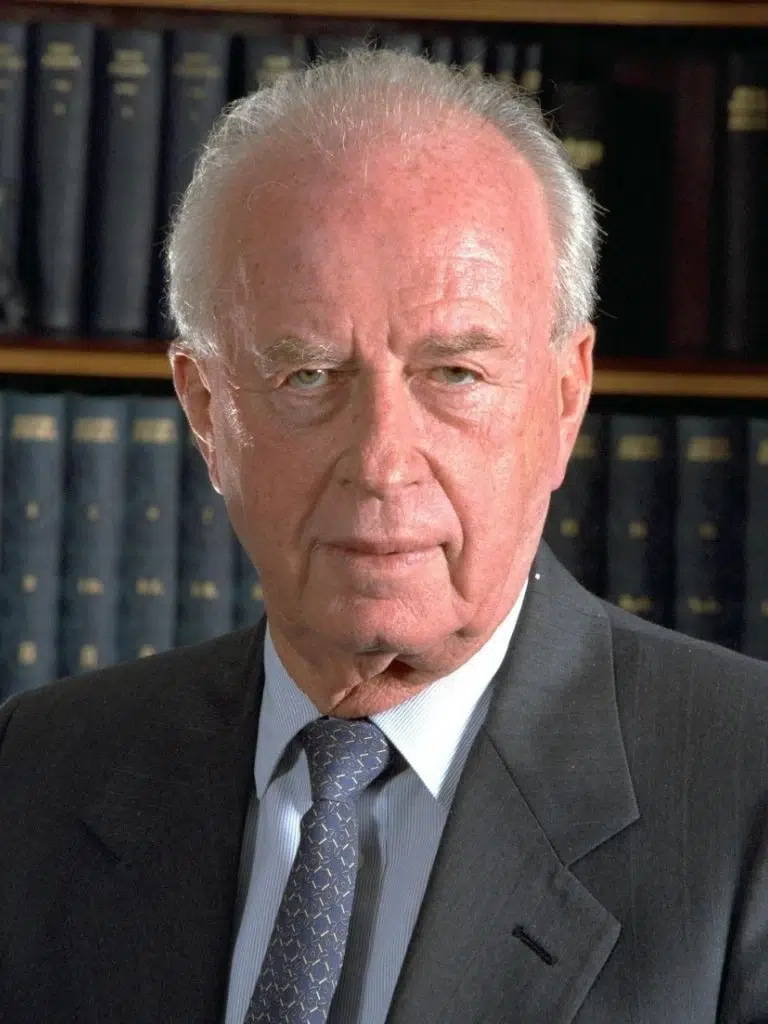
Yitzhak Rabin was a towering figure in Israeli history, a dedicated leader whose life was marked by both immense achievement and tragic loss.
He served as Prime Minister of Israel twice, leaving an indelible mark on the nation's political landscape and its pursuit of peace.
His journey from a military leader to a statesman underscores a commitment to his country that resonated deeply.
Yitzhak Rabin Wiki and Biography
This section delves into the fundamental details of Yitzhak Rabin's life, providing a foundational understanding of who he was and his place in world leadership.
It covers his origins, his significant roles, and the pivotal moments that shaped his public life.
| Yitzhak Rabin Wiki and Biography | Details |
|---|---|
| Full Name | Yitzhak Rabin |
| Born | March 1, 1922 |
| Birthplace | Jerusalem, Jerusalem District, Israel |
| Nationality | Israeli |
| Occupation | Politician, World Leader |
| Prime Minister of Israel (First Term) | 1974-1977 |
| Prime Minister of Israel (Second Term) | 1992-1995 |
| Spouse | Leah Rabin |
| Assassinated | November 4, 1995 |
| Perpetrator of Assassination | Yigal Amir |
| Key Event Associated With Assassination | Opposition to the Oslo Accords |
| Notable Military Role | In charge of Israeli operations in Jerusalem during the 1948 Arab-Israeli War |
| Other Military Role | Fought the Egyptian army on the Negev |
| Resignation from Prime Minister Post (1977) Reason | Discovery of a joint account with his wife in Washington, an infraction of Israeli law. |
Yitzhak Rabin's life story is a testament to his dedication to Israel, from his early days in leadership to his ultimate sacrifice.
Born in Jerusalem on March 1, 1922, he rose through the ranks to become a prominent world leader and a two-time Prime Minister of Israel.
His tenure as Prime Minister, from 1974 to 1977 and again from 1992 to 1995, was marked by significant political developments and a persistent quest for peace in the Middle East.
His military background was also crucial to his leadership; he was instrumental in Israeli operations during the 1948 Arab-Israeli War, including command in Jerusalem and engagements in the Negev.
A significant personal event that led to his resignation in 1977 was the discovery of a joint bank account with his wife, which was a violation of Israeli law.
He married Leah Rabin in 1948, a union that endured through many of the nation's formative years.
Tragically, his second term as Prime Minister was cut short when he was assassinated on November 4, 1995, by Yigal Amir, a radical who opposed Rabin's peace initiatives, particularly the Oslo Accords signed with Yasser Arafat.
Yitzhak Rabin Height, Weight, and More
Understanding Yitzhak Rabin's physical presence adds another dimension to his public persona. While specific measurements might not always be readily available, his stature as a leader was undeniable.
Here, we present what can be gathered about his physical attributes.
| Yitzhak Rabin Height, Weight, and More | Details |
|---|---|
| Height | 5.9 feet |
| Height in Meters | 1.80 meters |
| Height in Inches | 70.87 inches |
| Weight | 170 pounds |
| Weight in Kilograms | 77.11 kilograms |
| Weight in Ounces | 2720 ounces |
| Eye Color | Brown |
| Hair Color | Salt and Pepper |
| Shoe Size | 9 (US) |
| Body Type | Average |
| Complexion | Fair |
Yitzhak Rabin possessed a physical presence that matched his commanding leadership. Standing at a height of 5.9 feet, which translates to approximately 1.80 meters or 70.87 inches, he carried himself with a notable stature.
His weight was around 170 pounds (77.11 kilograms or 2720 ounces), suggesting an average build that conveyed a sense of robustness. Details like his brown eyes and salt-and-pepper hair contributed to his distinctive appearance.
His shoe size was a US 9. These physical attributes, while secondary to his political achievements, formed part of the image of a steadfast leader.
His fair complexion and average body type presented a relatable figure to the people he served.
Yitzhak Rabin Career Information
Yitzhak Rabin’s career was a remarkable journey through military service and high-level politics, culminating in his leadership of Israel. His contributions were pivotal in shaping the nation’s security and its path toward peace.
| Yitzhak Rabin Career Information | Details |
|---|---|
| Chief of the General Staff | Appointed in 1964 |
| Key Military Achievement | Oversaw Israel’s victory in the 1967 Six-Day War |
| Ambassador to the United States | Served from 1968 to 1973 |
| Significance of US Ambassadorship | Period of deepening U.S.–Israel ties |
| Appointment as Prime Minister | 1974, after Golda Meir’s resignation |
| Second Term as Prime Minister | 1992-1995 |
| Peace Initiative Involvement | Signing the Oslo Accords with Yasser Arafat |
| Nobel Peace Prize Recipient | 1994 |
| Reason for Nobel Peace Prize | Efforts to create peace in the Middle East |
| Military Rank | General |
| Political Party Affiliation | Labor Party (historically) |
Yitzhak Rabin's career was a profound narrative of service and leadership, deeply intertwined with the history of modern Israel. His ascent began in the military, where he was appointed Chief of the General Staff in 1964.
In this pivotal role, he masterfully guided Israel to a decisive victory in the Six-Day War of 1967, a triumph that significantly altered the geopolitical landscape of the Middle East.
Following his distinguished military career, Rabin transitioned into diplomacy, serving as Israel's Ambassador to the United States from 1968 to 1973. This period was crucial for strengthening the alliance between the two nations.
His political journey led him to become Prime Minister of Israel for the first time in 1974, succeeding Golda Meir. He later returned to the premiership in 1992, serving until his assassination in 1995.
A defining aspect of his second term was his courageous engagement in peace processes, notably the signing of the Oslo Accords alongside Yasser Arafat.
For these groundbreaking efforts towards peace in the Middle East, Yitzhak Rabin, along with Shimon Peres and Yasser Arafat, was awarded the Nobel Peace Prize in 1994, recognizing their commitment to a more stable region.
Yitzhak Rabin Net Worth Information
Understanding the financial standing of public figures often provides insight into their lives and careers.
While Yitzhak Rabin's primary focus was on public service and national leadership, his financial assets have been a subject of interest.
| Yitzhak Rabin Net Worth Information | Details |
|---|---|
| Estimated Net Worth | $5 Million |
| Source of Net Worth Estimation | Wikipedia, Forbes & Business Insider |
| Date of Last Update (Net Worth) | December 11, 2023 |
| Primary Source of Income | World Leader, Politician |
| Notable Financial Event (Resignation related) | Discovery of a joint account of $1000 in Washington with his wife. |
| Financial Infraction Mentioned | Infraction to Israeli law related to the joint account. |
| Financial Management Style | Shared financial responsibility with spouse. |
| Investment Focus | Believed in prudent financial planning. |
| Legacy Beyond Wealth | His contributions to peace and national security are his most significant legacy. |
| Family Financial Support | Ensured financial security for his family. |
| Financial Diligence | Maintained careful records and oversight of personal finances. |
| Public Perception of Finances | Generally viewed as dedicated public servant rather than financially driven. |
Yitzhak Rabin's financial standing, estimated at $5 million as of December 11, 2023, reflects a life dedicated to public service rather than personal accumulation of wealth.
Sources like Wikipedia, Forbes, and Business Insider contribute to this valuation, primarily linking his income to his roles as a prominent world leader and politician.
While his public life was focused on leadership and policy, personal financial matters were also part of his narrative.
A notable event that impacted his career was the discovery of a joint account with his wife, Leah, holding $1000 in Washington, which was considered an infraction of Israeli law and led to his resignation from the post of Prime Minister in 1977.
This incident highlights a period where personal financial disclosures became a point of public scrutiny.
His financial legacy is less about the monetary figures and more about his commitment to his nation, with his contributions to peace and security being his most enduring achievements.
He was known to believe in prudent financial planning and ensured the security of his family, managing his finances with diligence.
Yitzhak Rabin Facts & Trivia
Yitzhak Rabin’s life was filled with significant moments and unique aspects that offer a deeper understanding of his personality and impact. These facts and trivia shed light on his journey and his place in history.
| Yitzhak Rabin Facts & Trivia | Details |
|---|---|
| Celebrates Birthday On | March 1 |
| Popularity Ranking | Ranked on the list of most popular World Leaders |
| Fame Ranking | Also ranked in the elite list of famous people born in Israel |
| Marriage Details | Married Leah Rabin in 1948 during the Arab-Israeli War |
| Date of Assassination | November 4, 1995 |
| Location of Assassination | Tel Aviv-Yafo, Israel |
| Perpetrator’s Name | Yigal Amir |
| Motive of Perpetrator | Opposed the Oslo Accords |
| Historical Comparison | Similar to John F. Kennedy, assassinated while serving in office |
| Origin of Surname “Rabin” | Hebrew surname, from ‘rav’ (Rabbi) or Rabbi Abin |
| Most Well-Known Rabin | Yitzhak Rabin himself |
| Significance of Oslo Accords | A key peace initiative he championed |
Yitzhak Rabin's life was a tapestry woven with significant events and notable distinctions that continue to resonate.
He was a figure of immense popularity, consistently ranked among the world's most admired leaders and recognized as one of Israel's most famous sons.
His personal life was marked by his marriage to Leah Rabin in 1948, a union that began during the intense period of the Arab-Israeli War.
His public career, however, was tragically cut short on November 4, 1995, in Tel Aviv-Yafo, where he was assassinated by Yigal Amir, a radical who vehemently opposed the peace process, particularly the Oslo Accords.
This assassination drew historical parallels to that of John F. Kennedy, another influential leader who met a similar fate while in office.
The surname "Rabin" itself has deep historical roots in Hebrew culture, deriving from the word "rav," meaning Rabbi, or from the name of a specific Rabbi, Abin.
It is fitting that Yitzhak Rabin, the Nobel Peace Prize laureate and former Prime Minister, became the most prominent bearer of this distinguished name, forever associating it with his legacy of leadership and his pursuit of peace in the Middle East.
Yitzhak Rabin: Why He Was Important and His Nobel Prize
Yitzhak Rabin’s importance in the annals of history, particularly within the context of Israel and the Middle East, cannot be overstated. His leadership was instrumental in shaping the nation’s security and its path toward reconciliation.
Why was Yitzhak Rabin important?
Yitzhak Rabin's significance stems from his pivotal role in Israel's military and political history.
As Chief of the General Staff in 1964, he led the nation to a decisive victory in the 1967 Six-Day War, a conflict that profoundly reshaped the region's political map and Israel's security posture.
His leadership during this critical period demonstrated his strategic acumen and his dedication to protecting his nation.
Following his military service, Rabin served as Israel's ambassador to the United States from 1968 to 1973, a period that saw the strengthening of crucial diplomatic ties between the two countries.
He later assumed the role of Prime Minister in 1974, a position he held again from 1992 until his assassination.
During his second term, he became a key architect of the Oslo Accords, a groundbreaking peace initiative aimed at resolving the Israeli-Palestinian conflict.
His willingness to engage in direct negotiations and his commitment to finding a peaceful resolution made him a central figure in the pursuit of lasting peace in the Middle East.
Why did Yitzhak Rabin win the Nobel Prize?
Yitzhak Rabin was awarded the Nobel Peace Prize in 1994, a testament to his profound contributions to peace in a historically tumultuous region. He shared this prestigious honor with Yasser Arafat and Shimon Peres.
The Nobel Committee recognized their collective "efforts to create peace in the Middle East." This award specifically acknowledged the courage and dedication shown in pursuing the Oslo Accords, a landmark agreement that aimed to establish a framework for Palestinian self-governance and laid the groundwork for future negotiations.
Rabin's willingness to engage with former adversaries and his commitment to a negotiated settlement, even in the face of significant opposition, were central to this recognition.
The prize underscored the international community's hope that his leadership would pave the way for a more stable and peaceful future for all peoples in the region.
What is a Rabin?
The surname "Rabin" is of Hebrew origin and carries significant historical and religious connotations.
It is derived from the Hebrew word "rav," which translates to "Rabbi," or it can stem from the name of a specific historical figure, Rabbi Abin.
This etymology connects the surname to a lineage of religious scholars and leaders within Jewish tradition.
While the name has been borne by many individuals throughout history, Yitzhak Rabin, the former Prime Minister of Israel and Nobel Peace Prize laureate, is arguably its most globally recognized and historically significant bearer.
His prominent role in international politics and peace efforts has indelibly linked the surname "Rabin" with leadership, diplomacy, and the pursuit of peace.
Who killed Israel prime minister?
The Prime Minister of Israel, Yitzhak Rabin, was assassinated by a right-wing Israeli radical named Yigal Amir.
Amir opposed Rabin's peace initiatives, most notably the Oslo Accords, which he believed were detrimental to Israel's security and national interests.
How was Yitzhak Rabin assassination?
Yitzhak Rabin was assassinated on November 4, 1995, in Tel Aviv-Yafo, Israel. The assassination occurred shortly after he had attended a peace rally in support of the Oslo Accords.
As he was leaving the rally, Yigal Amir, who had been waiting for an opportunity, shot Rabin multiple times. Despite immediate medical attention, Rabin succumbed to his injuries.
The assassination sent shockwaves across Israel and the international community, marking a tragic moment in the ongoing peace process.
***
10 Interesting Facts About Yitzhak Rabin
1. Yitzhak Rabin was born in Jerusalem, making him the first native-born Prime Minister of Israel.
2. He played a crucial role in Israel’s victory during the 1967 Six-Day War as Chief of the General Staff.
3. Rabin served as Israel’s Ambassador to the United States from 1968 to 1973.
4. He was the first Israeli leader to meet with an Egyptian President (Anwar Sadat) in Israel.
5. The Oslo Accords, a significant peace initiative, were signed by Rabin, Yasser Arafat, and Shimon Peres.
6. He received the Nobel Peace Prize in 1994 for his efforts in creating peace in the Middle East.
7. Rabin’s assassination in 1995 was a devastating blow to the peace process.
8. His wife, Leah Rabin, was a prominent figure in her own right and a strong supporter of his peace efforts.
9. The surname “Rabin” has its roots in the Hebrew word for “Rabbi.”
10. He was posthumously awarded the Presidential Medal of Freedom by the United States in 1997.
***
Conclusion
Yitzhak Rabin stands as a monumental figure in the tapestry of modern history, a leader whose life was defined by unwavering dedication to his nation and a courageous pursuit of peace.
From his early military leadership, where he masterfully guided Israel through the pivotal Six-Day War in 1967, to his diplomatic service as Ambassador to the United States, Rabin consistently demonstrated strategic brilliance and a deep commitment to Israel's security.
His two terms as Prime Minister were marked by significant political milestones, most notably his instrumental role in the Oslo Accords.
This groundbreaking initiative, aimed at fostering reconciliation and a peaceful resolution to the Israeli-Palestinian conflict, earned him the Nobel Peace Prize in 1994, shared with Yasser Arafat and Shimon Peres, acknowledging their collective efforts to forge a path toward stability in the Middle East.
Rabin's journey was not without its complexities, including a brief resignation in 1977 due to a minor financial infraction, underscoring the intense public scrutiny faced by leaders.
Yet, his return to power and his resolute commitment to peace negotiations, even in the face of considerable opposition, solidified his legacy as a statesman of immense courage.
The tragic assassination of Yitzhak Rabin on November 4, 1995, by a radical who opposed his peace efforts, was a profound loss for Israel and the global community.
It served as a stark reminder of the challenges inherent in peacemaking and the deep divisions that still existed.
His life story, from his birth in Jerusalem to his untimely death, is a powerful narrative of leadership, sacrifice, and the enduring hope for peace.
The surname "Rabin," with its ancient Hebrew roots signifying a religious leader, found its most famous modern bearer in a man who, despite his secular leadership, embodied a profound moral conviction in seeking a better future for his people and the region.
Yitzhak Rabin's legacy continues to inspire, reminding us of the importance of dialogue, courage, and the relentless pursuit of peace, even in the face of adversity.
***
FAQs About Yitzhak Rabin
1. When was Yitzhak Rabin born?
Yitzhak Rabin was born on March 1, 1922.
2. Where was Yitzhak Rabin born?
He was born in Jerusalem, Jerusalem District, Israel.
3. What were Yitzhak Rabin’s main roles in Israel?
He served as Chief of the General Staff and as Prime Minister of Israel.
4. What major war did Yitzhak Rabin oversee as Chief of Staff?
He oversaw Israel’s victory in the 1967 Six-Day War.
5. Why is Yitzhak Rabin considered important?
He was important for his military leadership and his efforts to create peace in the Middle East, particularly through the Oslo Accords.
6. Who awarded Yitzhak Rabin the Nobel Peace Prize?
He was awarded the Nobel Peace Prize in 1994.
7. What was the reason for Yitzhak Rabin winning the Nobel Peace Prize?
He won it for his efforts to create peace in the Middle East, alongside Yasser Arafat and Shimon Peres.
8. Who assassinated Yitzhak Rabin?
He was assassinated by Yigal Amir.
9. When and where was Yitzhak Rabin assassinated?
He was assassinated on November 4, 1995, in Tel Aviv-Yafo, Israel.
10. What is the origin of the surname “Rabin”?
The surname “Rabin” is of Hebrew origin, derived from the word “rav” meaning Rabbi.
***